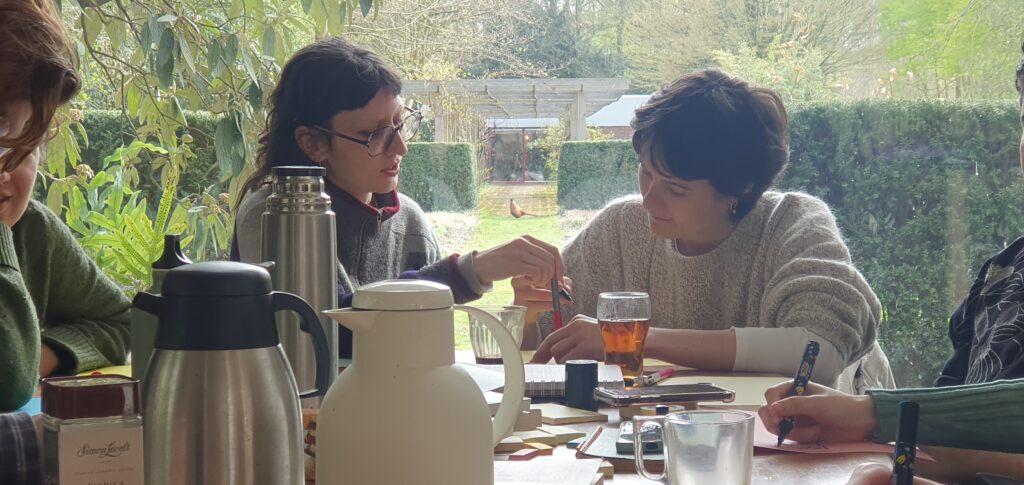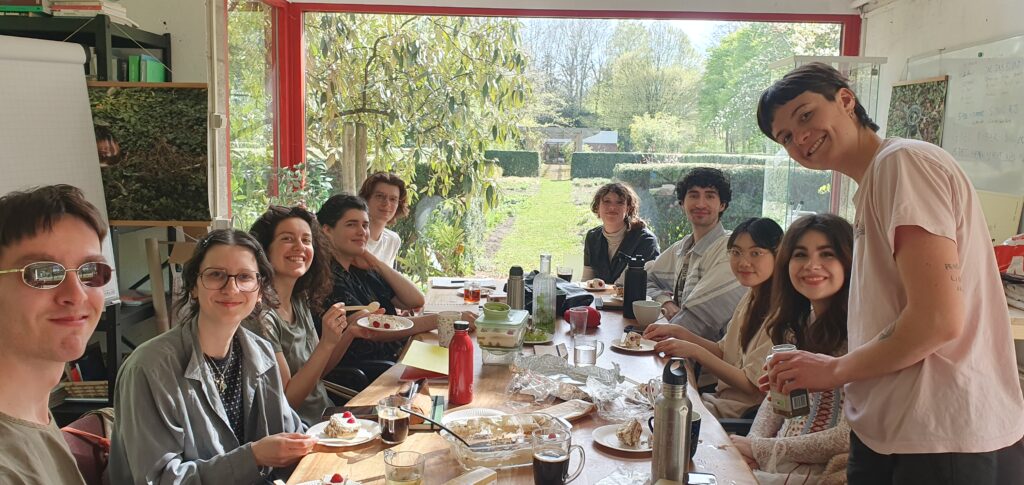
Now that our two year Research Master track ‘Environmental Humanities’ has been running for nearly three years, and that the second cohort of students is busy writing their theses, we feel it is time to express our admiration and gratitude. What an incredible group of students, with not only each of them, but also each new cohort with their very own dynamics. Students giving a statement at the city council to support the fight of the Lutkemeer activists, writing highly thoughtful theses, taking quiet care of the plant in our Environmental Humanities Library Room, starting their own artist collective, becoming core organizers of the Reclaim the Seeds festival, inventing time and time again fascinating and engaging ‘key concept in 15 minutes’ interventions, and so much more.
Not that it would always be easy… Choosing an Environmental Humanities track often comes with feelings of climate anxiety, with scepticism about academia, with doubts and struggles related to the undisciplined field of the Environmental Humanities. Doing Environmental Humanities is a challenge, not only as a student, but also as a teacher. Students see us struggling with finding the right balance between institutional hierarchies (we are the ones who grade them) and bonding with likeminded spirits, between the love for our own fields of research and the broad scope that the Environmental Humanities stand for, between the appeal of alternative pedagogies and the requirements of an academic Research Masters program. We remain aware of the frictions that come with trying to do this work within existing academic structures. And yet, it is precisely within these tensions that something meaningful is emerging.
If this program has taught us anything so far, it is that teaching and learning in the Environmental Humanities cannot be disentangled from vulnerability and the willingness to be changed by one another. In that sense, it truly is an undisciplined field which invites staying with the trouble in a myriad of individually different ways. We are indebted to our students for continuously co-shaping what this track can be, often in ways we could not have anticipated. We look forward to seeing how our graduates carry the spirit of this track into the world in similarly unexpected ways.